Multidimensional Cardiovascular Development — The Science of Synergy from Multi-Sport Training
A soccer match demands a total running distance of 10–13 km over 90 minutes, including roughly 30–40 sprints of 200 m or more. The cardiovascular system underpins this intermittent high-intensity effort, yet relying on soccer practice alone to maximize cardiovascular fitness is inefficient. Because soccer simultaneously demands technical skill, tactical awareness, and decision-making, the time available for purely cardiovascular stress is limited. Swimming, cycling, and running each improve cardiovascular function through different physiological mechanisms, and when combined they can push VO2max beyond the ceiling that soccer training alone can reach.
Why Soccer Training Alone Falls Short of Aerobic Potential
Soccer practice encompasses tactical understanding, technical development, and team coordination — structurally limiting the opportunity to push the cardiovascular system to its maximum.

Photo by Marc Fanelli-Isla on Unsplash
During a match, VO2 (oxygen uptake) averages 70–80% of VO2max, with intermittent surges above 95% occurring repeatedly (Stolen et al., 2005). Improving both the aerobic base and repeated-sprint ability requires raising VO2max itself. However, there are structural constraints that make it difficult to improve VO2max efficiently through soccer practice alone.
Structural Constraints of Soccer Practice
- Technical interference — Attention is split between ball skills, passing decisions, and positioning, making cardiovascular loading discontinuous
- Team dependency — Training intensity depends on other players' fitness levels and session design
- Injury risk — Frequent full sprints and sharp direction changes accumulate musculoskeletal stress
- Recovery conflict — Adding high-intensity running during inter-match recovery windows risks overload
A review by Midgley et al. (2006) demonstrated that the most effective protocol for VO2max improvement is repeated bouts of sustained exercise at 90–100% of VO2max lasting 3–5 minutes. Meeting this condition within a soccer session is difficult, but swimming intervals or cycling hill climbs can push the cardiovascular system to its limits without joint impact.
Soccer is a sport that uses cardiovascular fitness — but it is not the most efficient sport for building it. Bridging that gap is the fundamental purpose of cross-training.
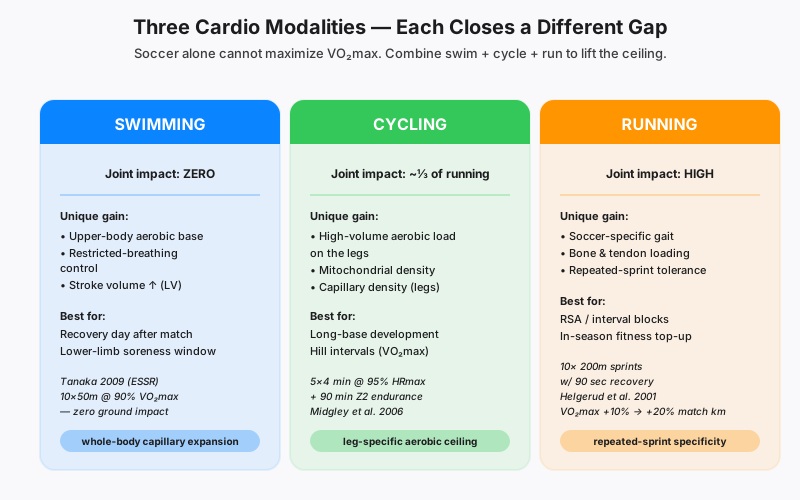
Swimming — Zero-Impact Upper-Body Aerobic Expansion
Swimming imposes virtually zero joint impact and is the only practical means of expanding upper-body aerobic capacity. Moreover, cardiovascular adaptation to a breathing-restricted environment improves oxygen utilization during high-intensity phases of soccer.
Swimming contributes to soccer-specific cardiovascular improvement through three unique mechanisms. First, it imposes virtually zero joint impact. Second, it recruits upper-body muscle groups aerobically. Third, it drives cardiovascular adaptation in a breathing-restricted environment. In a review published in Exercise and Sport Sciences Reviews, Tanaka (2009) showed that swim training promotes both morphological cardiac adaptation (left ventricular dilation) and functional adaptation (increased stroke volume).
Expanding Upper-Body Aerobic Capacity
A soccer player's aerobic capacity is heavily biased toward the lower limbs. Because the upper-body muscles are recruited aerobically to a relatively small degree during running, their oxygen uptake and utilization capacity remains underdeveloped. Swimming recruits the shoulder girdle, back muscles, and core aerobically, expanding whole-body mitochondrial density and capillary networks. This broader aerobic foundation manifests as improved recovery capacity during matches.
Adaptation to a Breathing-Restricted Environment
In swimming, breathing is not freely available — ventilation must be completed in a limited window at fixed stroke intervals. This restriction refines the ability to precisely regulate oxygen demand and ventilation timing. The adaptation transfers directly to soccer: delivering an accurate pass immediately after a sprint — maintaining sharp decision-making and technical execution while gasping for air.
- Low-impact intervals — 10 × 50 m intervals can drive VO2 above 90% of VO2max with zero joint loading
- Active recovery — Light swimming the day after a match accelerates recovery through enhanced blood flow
- Respiratory muscle training — Breathing restriction in the water simultaneously builds respiratory muscle strength and endurance
Swimming is the only practical way to train the cardiovascular system while resting the legs. It lets you combine post-match recovery with a genuine aerobic stimulus.
Cycling — Low-Impact Aerobic Volume for the Legs
Cycling recruits the same lower-limb muscles as soccer while eliminating impact forces, enabling safe accumulation of high aerobic volume. Its contribution to mitochondrial density and capillary development is particularly significant.
Cycling's value for soccer-specific cardiovascular improvement lies in its unique ability to engage the lower-limb muscles with zero impact. Each stride in soccer subjects the legs to forces 2–3 times body weight, whereas cycling involves primarily concentric contractions through pedaling, placing extremely low stress on joints and tendons. A review by Mujika & Padilla (2001) demonstrated that cycling is effective for preventing detraining and maintaining aerobic fitness in endurance athletes.
Safe Accumulation of Aerobic Volume
Building a robust aerobic base requires prolonged moderate-intensity exercise below threshold. However, performing this volume through running increases weekly mileage, raising the risk of tibial stress fractures and Achilles tendinopathy. Cycling allows multiple sessions of 60–90 minutes at moderate intensity per week with no adverse joint effects. This aerobic volume drives increases in mitochondrial density and capillary growth, raising the muscles' oxygen utilization efficiency.
Soccer-Specific Peripheral Adaptation
The primary muscles recruited during pedaling — quadriceps, hamstrings, glutes, and gastrocnemius — overlap heavily with those used in soccer running. Peripheral adaptations (improved intramuscular oxidative capacity) therefore transfer directly to soccer running performance. Hill climbs and power intervals are particularly effective for improving post-sprint recovery capacity.
- Base building (Zone 2) — 60–90 min moderate-intensity rides to increase mitochondrial density
- Threshold training — 20-minute efforts near FTP (Functional Threshold Power) to raise the lactate threshold
- Sprint intervals — 4–6 × 30-second all-out efforts to simultaneously develop anaerobic power and recovery capacity
A 60-minute Zone 2 bike ride delivers the same aerobic benefit as a 60-minute jog — with zero impact. It is the ideal tool for maintaining aerobic volume during the season.
Running — Breaking Through the VO2max Ceiling
Running is the most direct means of improving VO2max and has the highest specificity to soccer movement patterns. However, because impact forces are substantial, balancing quality and volume is key.
The reason running is the most effective modality for VO2max improvement is straightforward: the active muscle mass during running is maximal, venous return to the heart is maximized, and stroke volume reaches its peak. A meta-analysis by Midgley et al. (2006) recommended an optimal intensity of 90–100% of VO2max, bout duration of 3–5 minutes, and a frequency of 2–3 sessions per week for VO2max improvement.
VO2max Targets for Soccer Players
Elite soccer players typically have VO2max values in the range of 55–70 ml/kg/min (Stolen et al., 2005), with variation by position. Midfielders require high VO2max values, while center-backs can perform effectively with relatively lower levels. Each 1 ml/kg/min increase in VO2max is associated with approximately 15 m more high-intensity running distance per match — at the top level, a 1% difference can decide outcomes.
Effective Running Protocols
- 4 × 4-min intervals — Run at 90–95% of VO2max for 4 minutes, with 3-minute jog recoveries. Validated in soccer players by Hoff et al. (2002)
- 30-30 intervals — 30 seconds at VO2max velocity followed by 30 seconds of jogging, repeated 15–20 times. Shorter bouts reduce psychological burden while still reaching VO2max
- Tempo runs — 20–30 minutes sustained at lactate threshold (LT) pace. Raising LT extends the upper limit of the pace that feels comfortable during a match
However, running generates ground-reaction forces of 2–3 times body weight with every footstrike, and the combined weekly mileage from running and soccer accumulates musculoskeletal stress. During the season, high-intensity running should therefore be limited to 1–2 sessions per week, with the remaining aerobic volume supplemented by swimming and cycling. This is the safest and most effective strategy.
Running is the trump card for VO2max improvement — but not a cure-all. Manage impact loading and combine it with swimming and cycling so the cardiovascular system improves without the legs breaking down.
Integrating Three Modalities Into a Soccer Weekly Plan
Rather than adding swimming, cycling, and running indiscriminately, an integrated design is needed that accounts for the soccer practice and match schedule along with the specific loading characteristics of each modality.
The guiding principle of cross-training design is to maximize soccer performance — not to improve personal records in each of the three disciplines. The soccer match and practice schedule serves as the axis, with each modality placed according to its physiological characteristics and recovery cost.
Loading Characteristics and Placement Rules by Modality
- Swimming — Minimal musculoskeletal recovery cost. Ideal the day after a match or during fixture congestion. Combines recovery promotion with cardiovascular maintenance
- Cycling — Metabolic load on the lower limbs but zero joint impact. Best placed on days with 2–3 days of spacing to accumulate aerobic volume
- Running — Maximal cardiovascular stimulus but also maximal musculoskeletal cost. Limit to 1–2 sessions per week, placed at least 3 days away from match day
Sample Weekly Schedule (Weekend Match)
- Sunday (day after match) — 30 min swimming (low-intensity recovery swim). Promotes blood flow plus a light cardiovascular stimulus
- Monday — Soccer practice + 20 min cycling (Zone 2, as an extended cool-down)
- Tuesday — Soccer practice. No additional training when session intensity is high
- Wednesday — Light soccer + running intervals (4 × 4 min — the week's VO2max session)
- Thursday — Soccer practice + 30 min cycling (Zone 2, at an intensity that won't affect the next day's match)
- Friday — Light soccer (match eve). No additional training
- Saturday — Match
In this schedule, the running interval session is placed midweek — as far from match day as possible — while lower-impact swimming and cycling provide cardiovascular stimulation around match days. Total aerobic volume increases by 30–40% compared to a soccer-only week, yet the additional musculoskeletal impact is kept to a minimum.
When matters more than what. Combining proximity to match day with the right type of loading allows you to significantly improve cardiovascular fitness without cutting into soccer training time.
Tracking in Footnote — Measuring Cross-Training's Impact
Cardiovascular improvement is often felt only as 'it seems easier to run,' but quantitative tracking makes each modality's contribution visible and enables data-driven optimization of the training mix.
Cardiovascular gains are experienced as a sense of greater reserves during a match, but without documentation it is impossible to pinpoint which training stimulus is responsible. Use Footnote to track the relationship between cross-training content and match performance.
What to Record
- Session details — Modality, duration, and intensity recorded precisely. Example: 'Cycling 45 min Zone 2, HR 140–150 bpm'
- Rate of perceived exertion (RPE) — Record subjective intensity on a 1–10 scale. A declining RPE for the same workout indicates cardiovascular improvement
- Comparison with soccer feel — Example: 'Recovered breathing faster than after soccer practice,' 'Legs felt light after swimming and movement was better at soccer the next day'
- Match-day changes (add post-match) — Example: 'Sprint quality did not drop after the 75th minute,' 'Post-match fatigue noticeably lighter than last month'
Metrics for Measuring Effectiveness
- Second-half running distance and sprint count — Where GPS data is available, comparing first and second halves reveals changes in endurance
- Subjective reserves by phase — Record 'had plenty left / felt heavy' by time period in the match. Track week-over-week trends
- Recovery speed — Record how many seconds after a sprint it takes to feel ready to go again
- Day-after condition — Quantify next-day leg heaviness and overall fatigue
Footnote's five-match analysis visualizes the correlation between cross-training frequency, modality, and match performance. Discovering patterns such as 'sprint count in the second half increased 15% in weeks with two swim sessions' or 'recovery the day after a match is faster in months with higher cycling volume' helps you identify the cross-training mix that works best for you.
Cardiovascular improvement is hard to see — which is exactly why tracking is essential. The player who can turn 'it feels a bit easier' into 'here is exactly what changed and when' is the one who gains an edge through training quality.
Frequently Asked Questions
Should I cut soccer practice time to fit in cross-training?▾
No. Swimming and cycling can be scheduled around soccer practice or on rest days. The default approach is to add cardiovascular training in available windows while maintaining the quality of soccer sessions. The only exception is running intervals — because of their high musculoskeletal load, avoid scheduling them on the same day as intense soccer training.
Can swimming still help if I'm not a strong swimmer?▾
Yes. The cardiovascular benefit depends on exercise intensity and duration, not stroke technique. Even 25 m repeats with 15-second rests are effective as long as heart rate reaches 80–90% of VO2max. Kickboard-only sets or pull-buoy upper-body sets both deliver an aerobic stimulus. The goal is to push the cardiovascular system in the water, not to perfect your stroke.
Will cycling make my legs bulky and hurt my soccer performance?▾
Zone 2–3 (moderate to moderately-high intensity) aerobic training causes virtually no muscle hypertrophy. Leg bulk only becomes a concern with frequent high-load, low-cadence sprint sessions. Cycling for soccer cross-training focuses on light gears at a high cadence (80–100 rpm) for aerobic development — there is no need to worry about weight gain or muscle hypertrophy.
How long does it take to improve VO2max?▾
With an appropriate training program, a 3–5% improvement in VO2max can be expected within 4–8 weeks (Midgley et al., 2006). However, the rate of improvement slows after the initial adaptation phase, so training stimuli need to be varied periodically. Combining three cross-training modalities provides diverse physiological stimuli on an ongoing basis, making it easier to break through plateaus.
How should I log cross-training sessions in Footnote?▾
Record the modality name, duration, and intensity (heart rate or RPE) in Footnote's practice log. It is also important to add a brief note connecting the session to soccer — for example, 'Legs felt warmed up after 45 min on the bike, and first-step quickness was better at soccer the next day.' The AI analysis detects correlations between each modality's frequency and match performance, so specifying the modality is key.
References
- [1] Midgley, A. W., McNaughton, L. R., & Wilkinson, M. (2006). “Is there an optimal training intensity for enhancing the maximal oxygen uptake of distance runners?” Sports Medicine, 36(2), 117–132. Link
- [2] Tanaka, H. (2009). “Swimming exercise: Impact of aquatic exercise on cardiovascular health” Sports Medicine, 39(5), 377–387. Link
- [3] Mujika, I. & Padilla, S. (2001). “Cardiorespiratory and metabolic characteristics of detraining in humans” Medicine and Science in Sports and Exercise, 33(3), 413–421.
- [4] Stolen, T., Chamari, K., Castagna, C., & Wisloff, U. (2005). “Physiology of soccer: An update” Sports Medicine, 35(6), 501–536. Link
- [5] Hoff, J., Wisloff, U., Engen, L. C., Kemi, O. J., & Helgerud, J. (2002). “Soccer specific aerobic endurance training” British Journal of Sports Medicine, 36(3), 218–221. Link
- [6] Helgerud, J., Engen, L. C., Wisloff, U., & Hoff, J. (2001). “Aerobic endurance training improves soccer performance” Medicine and Science in Sports and Exercise, 33(11), 1925–1931.
- [7] Buchheit, M. & Laursen, P. B. (2013). “High-intensity interval training, solutions to the programming puzzle: Part I” Sports Medicine, 43(5), 313–338. Link
- [8] Foster, C., Florhaug, J. A., Franklin, J., Gottschall, L., Hrovatin, L. A., Parker, S., Doleshal, P., & Dodge, C. (2001). “A new approach to monitoring exercise training” Journal of Strength and Conditioning Research, 15(1), 109–115.
Related Articles
Verbalization Accelerates Transfer -- Why Writing Makes Skills from Other Sports Carry Over to Soccer
11 min read
How Swimming Transforms Cardiovascular Fitness, Upper-Body Strength, and Recovery for Soccer Players
10 min read
The Science Behind Cycling for Soccer: Endurance, Pacing, and Knee Protection
10 min read
How Track and Field Transfers Sprint Speed, Agility, and Endurance to Soccer
11 min read
The Science of Multi-Sport Training — How Playing Multiple Sports Rewires the Brain and Body
11 min read
Track Your Growth with Footnote
Just record your matches — AI analyzes every 5 games. Visualize growth with PVS Score. All features free during beta.
30-second signup · No credit card required
Last updated: 2026-05-06 ・ Footnote Editorial