Nutrition Guide for Junior Soccer Players — An Evidence-Based Plan for Optimal Growth
For growing soccer players, nutrition is one of the most important forms of training. Research by Desbrow et al. (2014) has shown that adolescent athletes require 20-30% more energy than non-athletes of the same age, and that deficiencies in calcium, iron, and vitamin D in particular can negatively impact both performance and growth. Yet many parents struggle with the question of what to feed their child, when, and how much. This guide draws on the latest findings in sports nutrition to present a systematic breakdown of the nutritional strategies young soccer players need, organized by match days, training days, and rest days.
Nutrition Science for Growing Athletes — Energy, PFC Ratios, and Micronutrient Essentials
Growing soccer players must obtain enough energy from food to fuel both their physical development and their athletic activity. The IOC consensus statement (Bergeron et al., 2015) warns that chronic energy deficiency in junior athletes can trigger REDs (Relative Energy Deficiency in Sport), leading to reduced bone density, impaired growth, and weakened immunity.

Photo by micheile henderson on Unsplash
The energy requirements of junior soccer players vary greatly depending on age, body weight, and training volume. As a general guideline, elementary school children (ages 8-12) need approximately 60-70 kcal per kilogram of body weight on training days, while middle school students (ages 13-15) need 65-75 kcal per kilogram. For a 30 kg fourth-grader, that translates to roughly 1,800-2,100 kcal per day; for a 50 kg eighth-grader, the target is 3,250-3,750 kcal.
PFC Ratios — Balancing the Three Macronutrients
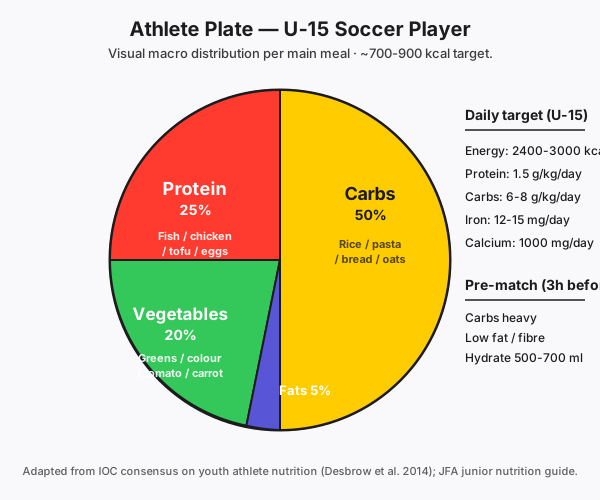
PFC ratio refers to the caloric ratio of Protein, Fat, and Carbohydrate. Based on research by Burke et al. (2011), the following ratios are recommended for junior players engaged in intermittent high-intensity sports like soccer.
- Carbohydrates 55-60% — Essential for replenishing muscle glycogen and fueling the brain. Primary sources include rice, bread, noodles, and fruit. Aim for 5-7 g per kilogram of body weight on training days
- Protein 15-20% — Supports muscle repair and growth. Sourced from meat, fish, eggs, and soy products. An intake of 1.2-1.6 g per kilogram of body weight is appropriate; junior athletes do not need as much as adult athletes
- Fat 25-30% — Vital for hormone synthesis and fat-soluble vitamin absorption. Extreme fat restriction should be avoided as it can suppress growth hormone secretion
Calcium and Iron — The Nutrients Most Often Lacking During Growth
Petrie et al. (2004) reported that growing athletes face a particularly high risk of calcium and iron deficiency. During the rapid bone growth period between ages 10 and 15, a daily intake of at least 1,000 mg of calcium is recommended. Drinking 200 ml of milk three times a day (approximately 220 mg per serving) is not enough on its own. A variety of foods such as yogurt, cheese, small fish, and leafy greens must be combined to meet the target.
Iron is a key component of hemoglobin, which carries oxygen throughout the body; a deficiency leads to a significant drop in endurance. Soccer players also face the risk of foot-strike hemolysis caused by repeated impact on the soles of the feet. It is important to actively consume iron-rich foods such as lean red meat, liver, clams, and spinach, and to combine them with vitamin C to enhance absorption.
Energy deficiency during the growth period is not just about failing to gain weight. REDs (Relative Energy Deficiency in Sport), as defined by Mountjoy et al. (2014), can cause reduced bone density, weakened immunity, poor concentration, and increased injury risk. In many cases, the reason a child 'trains hard but doesn't improve' actually comes down to nutrition.
A Daily Meal Model Plan — Structuring Breakfast, Lunch, Dinner, and Snacks
The standard meal structure for a junior soccer player is three main meals plus two snacks. Rather than consuming large quantities in a single sitting, spreading intake across well-timed meals improves nutrient absorption and ensures a stable energy supply during training and matches.

Photo by Eaters Collective on Unsplash
Growing soccer players have smaller stomachs and cannot consume all the calories they need in one meal. By adding two snacks — one before and one after training — to the three main meals of breakfast, lunch, and dinner, daily energy intake can be distributed without strain. Below is a model plan for a fifth-grader weighing 35 kg with approximately two hours of daily training.
Breakfast (7:00 AM) — Starting the Day's Engine
- One bowl of rice (200 g) — Approximately 300 kcal. The primary carbohydrate source. Rice has a more stable glycemic index than bread and keeps you feeling full longer
- Fried egg + 2 sausage links — Approximately 200 kcal. Provides protein and fat. Consuming protein in the morning activates muscle protein synthesis throughout the day
- Miso soup (tofu and seaweed) — Approximately 50 kcal. Combines soy protein, minerals, and hydration. Since the body is dehydrated in the morning, soup is especially important
- One glass of milk (200 ml) — Approximately 130 kcal. Contains 220 mg of calcium. Building a morning milk habit helps ensure regular calcium intake
Lunch (12:30 PM) — Fueling for Afternoon Training
School lunches generally provide adequate nutrition, but if seconds are available, adding another serving of rice is recommended. For packed lunches, increase the rice portion to 1.2-1.5 times the usual amount and always include a protein source (such as a rolled omelet, teriyaki chicken, or salmon). Vegetables should be primarily cooked (such as broccoli or glazed carrots).
Pre-Training Snack (3:00-4:00 PM) — Glycogen Loading
- One rice ball (100 g) — Approximately 170 kcal. Digests quickly and is easy on the stomach. Fillings like salmon, pickled plum, or kelp that are low in fat are ideal
- One banana — Approximately 90 kcal. Provides quick-acting carbohydrates along with potassium, which helps prevent muscle cramps
- 100% orange juice (200 ml) — Approximately 80 kcal. Delivers hydration, carbohydrates, and vitamin C simultaneously
Dinner (7:30-8:00 PM) — The Recovery Centerpiece
Dinner should be the most nutrient-dense meal of the day. It should provide a well-balanced combination of protein for post-training muscle repair, carbohydrates for glycogen replenishment, and side dishes rich in calcium, iron, and vitamins.
- 1.5 bowls of rice (300 g) — Approximately 450 kcal. Larger than the breakfast portion in order to restore glycogen depleted during training
- Main dish: Pan-seared chicken thigh (150 g) — Approximately 300 kcal. About 25 g of protein. Aim to include lean red meat at least three times a week as well
- Side dish 1: Simmered hijiki seaweed — A triple boost of iron, calcium, and dietary fiber
- Side dish 2: Broccoli and tomato salad — Rich in vitamins C and A, plus antioxidants
- Soup: Pork and vegetable miso soup — Vitamin B1 from pork promotes the conversion of carbohydrates to energy. Root vegetables add dietary fiber
Snacks are not treats — they are the 'fourth and fifth meals.' The purpose of a pre-training snack is energy supply; the purpose of a post-training snack is recovery. Instead of sugary pastries or chips, choose nutrient-rich light foods such as rice balls, bananas, and yogurt.
Match-Day Nutrition Strategy — A Timeline from 3 Hours Before Kickoff to Post-Match
Meal timing on match day has a direct impact on performance. Research by Burke et al. (2011) found that players who consumed a high-carbohydrate meal 3-4 hours before kickoff completed 12-15% more sprints in the second half. Conversely, eating a high-fat meal too close to the match can cause indigestion and abdominal discomfort.
The golden rule on match day is to eat familiar foods. Trying a new food for the first time on match day is strictly off-limits. To avoid gastrointestinal issues, build your match-day menu around meals you are accustomed to eating. The following timeline assumes a 10:00 AM kickoff.
3-4 Hours Before the Match (6:00-7:00 AM) — The Main Meal
- 1.5 bowls of rice + grilled salted salmon + miso soup — An ideal balance of carbohydrates and protein. Keep fat to a minimum
- Udon noodles + soft-boiled egg + rice ball — Easy to digest with minimal stomach burden
- 2 slices of toast + honey + boiled egg + milk — For those who prefer bread. Apply butter only sparingly
General rule: Avoid fried foods, heavy cream, and large amounts of raw vegetables. Fat takes 4-6 hours to digest and can cause a heavy stomach during the match.
1-2 Hours Before the Match (8:00-9:00 AM) — A Light Snack
At this stage, avoid solid foods that take time to digest and opt for a small amount of fast-absorbing carbohydrates. One banana, an energy gel, or a slice of sponge cake are all suitable options. This is also a good time to hydrate — aim for 250-350 ml. Rather than drinking it all at once, sip small amounts every 15 minutes.
Halftime — Rapid Energy Replenishment
- Hydration comes first — Performance begins to decline with just 1% body weight loss from dehydration. Drink 250-400 ml of water or a sports drink
- Supplemental carbohydrates — Bite-sized rice balls, energy gels, or 100% juice. Have something ready that can be consumed in 30 seconds
- What to avoid — Large amounts of solid food, carbonated beverages, and overly cold drinks
Within 30 Minutes After the Match — The Recovery Golden Window
The 30 minutes immediately following a match represent a 'golden window' during which muscle glycogen is replenished 2-3 times faster than normal. During this period, it is recommended to consume carbohydrates and protein in a 3:1 ratio. Specifically, 2 rice balls + 200 ml of milk, or a banana + yogurt + orange juice are convenient and effective options.
In consecutive-match tournament settings, this recovery meal can determine performance in the next game. When there are fewer than two hours between matches, avoid solid foods and keep replenishing carbohydrates with fast-digesting options such as energy gels, sports drinks, and bananas.
The most common pre-match nutrition mistake is eating steak or pork cutlet 'for motivation.' Protein and fat take a long time to digest, causing blood to concentrate in the digestive system during the match and lowering performance. Before a match, a 'plain' carbohydrate-centered meal is the best performance fuel.
Training-Day Nutrition — The Science of Pre/Post-Training Snacks and Hydration
Training-day nutrition does not need to be as strict as match-day nutrition, but pre-training snacks and hydration during practice are two areas that should always receive attention. Petrie et al. (2004) suggest that proper hydration during training also helps maintain cognitive function, preserving the quality of tactical understanding and positioning decisions.
When players head straight from school to practice, there is typically a 4-5 hour gap since lunch. During this time, energy stores are depleted, and it is extremely common for players to begin practice in a state of 'empty tank.' A pre-training snack is not simply about filling the stomach — it is a strategic act designed to replenish muscle glycogen and elevate the quality of training.
Pre-Training Snack Options (1-2 Hours Before Practice)
- Rice ball (salmon or kelp) + banana — The most convenient and nutritionally balanced classic combination. In winter, keep the rice ball warm in an insulated pouch for easier eating
- Toast (honey + soy flour) + milk — Soy flour adds plant-based protein and magnesium. The fructose in honey is absorbed quickly
- 2 slices of sponge cake + 100% fruit juice — Low in fat and quick to digest, traditional Japanese sweets are ideal for snacking. Sponge cake also contains egg-derived protein
- 1 steamed bun + a mandarin orange — Easy to pick up at a convenience store, offering a well-balanced mix of carbohydrates, protein, and fat — a great winter option
The Science of Hydration — What, When, and How Much to Drink
Growing athletes have less mature thermoregulation compared to adults, putting them at higher risk of dehydration. The IOC consensus statement by Bergeron et al. (2015) recommends that for junior athletes, 'drinking when thirsty' is not sufficient, and a planned hydration schedule should be adopted.
- Before training — Drink 250-350 ml of water at least 30 minutes before practice starts. If urine is pale yellow to clear, hydration status is good
- During training — Aim for 150-250 ml every 15-20 minutes. For sessions lasting over 60 minutes, a sports drink (4-8% carbohydrates, containing sodium) is recommended
- After training — Replenish 1.5 times the weight lost within 2 hours. If 500 g of body weight was lost, the target is 750 ml
Post-Training Recovery Food
The ideal approach is a two-step process: consume a light snack containing carbohydrates and protein within 30 minutes of training, then eat a nutrient-dense dinner after returning home. Appetite is often low right after practice, so liquid or gel-form options like drinkable yogurt, chocolate milk, or energy gels may be easier to consume. Chocolate milk has a carbohydrate-to-protein ratio of approximately 3:1 and has been scientifically validated as an effective recovery drink.
During summer training sessions, players can lose 500 ml to 1 L of sweat per hour. Bring a water bottle of at least 1 L and make it a habit to fill it before practice. In peak summer heat, sodium replenishment — not just water — is critical. Use oral rehydration solutions or sports drinks as needed.
Common Nutrition Issues and Solutions — Picky Eating, Small Appetites, and Difficulty Gaining Weight
'My child barely eats...' 'They won't touch vegetables.' 'They're small and get pushed off the ball.' Most concerns parents raise are nutrition-related. As research by Mountjoy et al. (2014) demonstrates, these issues are not simply matters of personal preference — they are nutritional challenges that directly affect performance and growth and must be addressed accordingly.
Dealing with Picky Eating — Substitute, Don't Force
Telling a picky eater to 'eat it whether you like it or not' often backfires. If mealtimes become a source of stress, overall food intake may actually decrease, worsening nutritional status. The key is not to force disliked foods but to replace them with alternative foods that provide the same nutrients.
- Dislikes fish -> Secure protein from chicken, pork, or eggs. DHA can be obtained from flaxseed oil or perilla oil
- Dislikes vegetables -> Use fruit for vitamin C; finely dice vegetables into soups or curries; supplement with vegetable juice
- Dislikes milk -> Obtain calcium from yogurt, cheese, small fish, or tofu. Try flavored alternatives such as cocoa or milk-based desserts
- Dislikes meat -> Secure protein from fish, eggs, and soy products (natto, tofu, thick fried tofu). Mixing tofu into hamburger patties is also effective
Strategies for Small Appetites — Increase Frequency, Not Portion Size
When increasing meal size is difficult, increasing meal frequency is the most practical solution. In addition to the standard three meals plus two snacks, adding a light pre-bedtime snack creates a six-meal-a-day structure that reduces the burden of each individual meal while still meeting total calorie needs. Good pre-bedtime snack options include yogurt with honey, or warm milk with sponge cake — items that are easy to digest.
When Weight Won't Increase — The 'Eating Enough' Illusion
If you feel that your child is 'eating a lot but not gaining weight,' start by photographing every meal for three days. In most cases, the record reveals clear issues: rice portions are too small, protein sources are insufficient, or snacks are being skipped entirely. The single biggest cause of calorie deficit is usually the amount of rice (the staple). Simply increasing rice portions by 1.2-1.5 times can often lead to visible improvement.
Junior Protein Supplements — Food First
The current consensus in sports nutrition regarding junior protein supplements is 'generally unnecessary, but conditionally acceptable.' Desbrow et al. (2014) explicitly state that food should be the first choice for meeting the nutritional needs of adolescent athletes, not supplements. However, in the following situations, using a junior-formulated protein supplement may be worth considering.
- When appetite is extremely low and dietary protein intake falls below 1.0 g per kilogram of body weight
- As a recovery aid for players who cannot eat solid food after training
- During away trips or training camps as a temporary measure when adequate meals are not available
Thinking 'it's fine because they drink protein shakes' is a dangerous mindset. Supplements are meant only to fill gaps. Adding protein supplements when a player already gets enough from food provides no additional benefit, and excessive protein intake can place undue stress on the kidneys.
Practical Tips for Parents — Shopping Lists, Quick Recipes, and Smart Eating Out
Understanding the theory is one thing, but preparing meals every day falls to parents. Here we share a 'must-have' pantry list, five recipes you can make in 15 minutes, and tips for choosing wisely at restaurants and convenience stores.
Essential Pantry List — Your Refrigerator's 'Starting Lineup'
To support a junior soccer player's nutrition, we recommend always keeping the following items stocked. With these on hand, you can quickly prepare nutritionally balanced meals ranging from snacks to full dinners.
- Carbohydrate sources — Rice (pre-washed for convenience), bread, udon noodles (frozen), bananas, rice cakes
- Protein sources — Eggs, chicken breast (frozen), salmon fillets (frozen), natto (fermented soybeans), tofu, canned tuna, fish sausages
- Calcium sources — Milk, yogurt, whitebait, cheese, leafy greens
- Iron sources — Lean ground beef (frozen), spinach (frozen), canned clams, dried hijiki seaweed
- Vitamins and minerals — Broccoli (frozen), tomatoes, mandarin oranges, kiwi fruit, 100% juice
Five 15-Minute Recipes
- Salmon fried rice — Flake frozen salmon and stir-fry with rice, egg, and leafy greens. Covers carbohydrates, protein, calcium, and iron in one dish. Season simply with soy sauce, salt, and pepper
- Tuna and tomato udon — Microwave frozen udon, then toss with canned tuna, diced tomato, and noodle sauce. A refreshing cold dish perfect for after summer practice. Delivers protein and lycopene together
- Chicken and egg rice bowl — Simmer chicken thigh and onion in broth, then finish with beaten egg. Pile generously over rice for easy calorie adjustment. Provides both chicken protein and the vitamin D found in eggs
- Natto and whitebait rice + miso soup set — The simplest complete meal. Soy protein from natto, calcium from whitebait, and minerals plus sodium from miso soup. Perfect for rushed mornings
- Banana yogurt smoothie — Blend banana, yogurt, milk, and honey. An ideal recovery drink when appetite is low after practice. Adding soy flour boosts protein and iron content
Smart Choices When Eating Out or at Convenience Stores
During away matches or travel, eating at restaurants or convenience stores may be unavoidable. When that happens, keep the following points in mind when selecting your meal.
- Convenience stores — Two rice balls + a grilled chicken breast snack + a banana + milk is the ultimate combination. Avoid fried items and hot snacks before matches. Also consider 100% juice or drinkable yogurt
- Family restaurants — Choose Japanese-style set meals (grilled fish, ginger pork) and go for a large serving of rice. These are lower in fat and easier to digest than hamburger steak sets
- Noodle shops — Ideal for pre-match dining. Excellent for carbohydrate loading with minimal digestive burden. Limit tempura to one item
- Beef bowl chains — A regular-sized beef bowl + miso soup + salad offers good nutritional balance. The extra-large size has too much fat; opt for a regular portion with an extra serving of rice instead
A Philosophy of Food Education — A Happy Table Is the Best Nutrition
The final point to emphasize is that meals should be enjoyable. If the pursuit of a nutritionally perfect diet turns the dinner table into a source of pressure, it defeats the purpose. Rather than scolding with 'Eat this' or 'Why did you leave that?' at every meal, eating together, cooking together, and naturally sharing why certain foods help with soccer through conversation will lead to far better long-term dietary habits.
Children's eating habits are changed by curiosity, not by scolding. A simple comment like 'This broccoli is packed with vitamin C, which helps injuries heal faster' can be the spark that overcomes a food aversion.
— Sports Dietitians Australia Guidelines
You don't need to aim for the perfect diet. 'Eat enough rice,' 'Include protein at every meal,' and 'Drink milk every day' — these three things alone can dramatically improve a junior soccer player's nutritional status. Start here.
References
- [1] Desbrow, B., et al. (2014). “Sports Dietitians Australia position statement: Sports nutrition for the adolescent athlete” International Journal of Sport Nutrition and Exercise Metabolism.
- [2] Petrie, H. J., Stover, E. A. & Horswill, C. A. (2004). “Nutritional concerns for the child and adolescent competitor” Nutrition.
- [3] Bergeron, M. F., et al. (2015). “International Olympic Committee consensus statement on youth athletic development” British Journal of Sports Medicine.
- [4] Burke, L. M., et al. (2011). “Carbohydrates for training and competition” Journal of Sports Sciences.
- [5] Mountjoy, M., et al. (2014). “The IOC consensus statement: Beyond the Female Athlete Triad — Relative Energy Deficiency in Sport (RED-S)” British Journal of Sports Medicine.
Related Articles
The Truth About the Golden Age — Neuroscience Reveals Optimal Training by Age Group
11 min read
Soccer Training to Get Faster — 5 Methods Proven by Sprint Science
14 min read
Traits of Kids Who Excel in Soccer — 5 Growth Factors Backed by Sports Science
16 min read
The Complete Match Day Preparation Guide for Soccer — From the Night Before to Post-Match Recovery
11 min read
Injury Prevention Guide for Junior Soccer Players — FIFA 11+ Kids and Evidence-Based Prevention Programs
16 min read
Track Your Growth with Footnote
Just record your matches — AI analyzes every 5 games. Visualize growth with PVS Score. All features free during beta.
30-second signup · No credit card required
Last updated: 2026-05-06 ・ Footnote Editorial